AeroPress vs. Pour-over: Which brewing method is right for you?
Coffee lovers will sooner or later face this choice: will you go for the versatile AeroPress, or choose the classic elegance of a pour-over? Both methods yield great coffee but differ significantly in taste, technique, and ease of use. Below is a comprehensive overview to help you truly determine what best suits your routine.
What is an AeroPress?
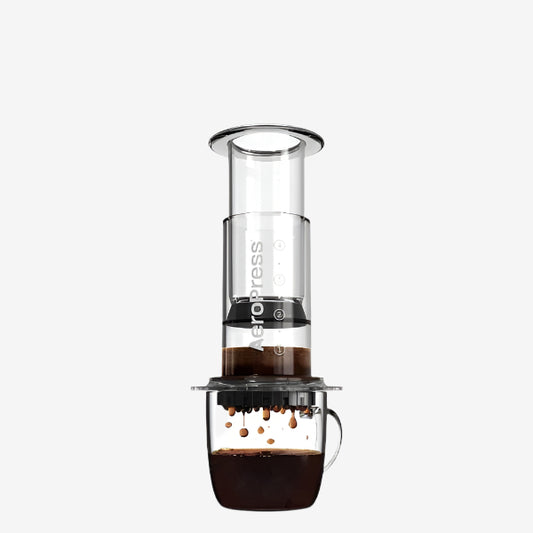
The AeroPress is a compact brewing method where you brew coffee by pressing water and coffee through a filter under light pressure. The device was designed with simplicity and consistency in mind, but has since become a favorite among beginners and professionals alike.
Features:
- Brew time: ± 1–2 minutes
- Taste: full-bodied, round, often slightly more intense
- Usage: simple and quick
- Ideal for: home, work, and on the go
What makes the AeroPress special is its enormous flexibility. You can work with various recipes, such as the inverted method, longer extractions, or short, powerful shots. This allows you to vary from an espresso-like profile to a soft, filter-like cup of coffee.
What is pour-over?
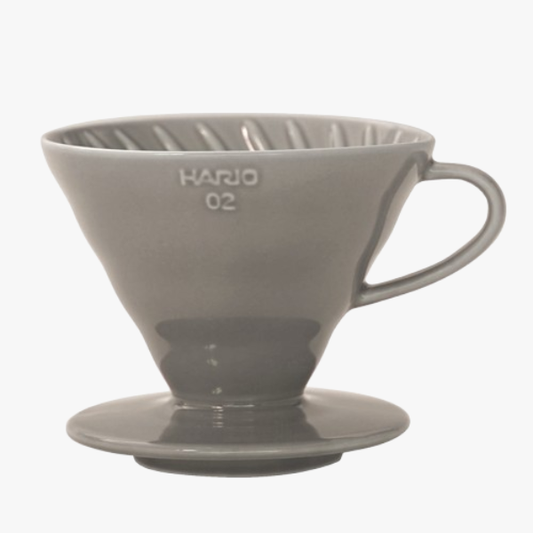
Pour-over is a collective term for manual filter methods where you pour hot water over ground coffee in a controlled manner. Well-known examples include the V60, Kalita Wave, and Chemex.
Features:
- Brew time: ± 2–4 minutes
- Taste: clean, fresh, complex
- Usage: technique-sensitive
- Ideal for: coffee lovers who seek nuance
With pour-over, it's all about precision. The way you pour — speed, pattern, and timing — directly affects the extraction. This makes it both challenging and highly satisfying.
What do you really taste?
The difference between these methods is not just about “strong vs. light,” but primarily about how flavors are extracted.
AeroPress:
- More body (mouthfeel)
- Less emphasis on acidity
- Often chocolatey, nutty, and round
- Pressure results in a slightly more intense extraction
Pour-over:
- Clean, “transparent” cup
- More emphasis on acidity and fruitiness
- Floral and complex aromas come through better
- Less body, but more definition
For example, if you're drinking an Ethiopian coffee with many berry and floral notes, pour-over will often bring those out better.
If you have a Brazilian coffee with chocolate and nutty notes, the AeroPress can enhance those nicely.
Extraction and technique (for enthusiasts)
If you delve a little deeper into the matter, you'll see that the main difference lies in the extraction method:
-
AeroPress = immersion + pressure
Coffee and water are in contact, after which you press it through a filter. This ensures even extraction. -
Pour-over = percolation
Water flows through the coffee. Flow rate plays a major role here.
What grind do you need?
The grind differs per method and has a major impact on the taste.
- AeroPress: medium to fine (depending on the recipe)
- Pour-over: medium to coarse
Too fine a grind for pour-over can lead to bitterness and clogging, while too coarse a grind for AeroPress can result in a flat taste.
Ease of use
Here lies one of the biggest differences.
AeroPress:
- Quick (perfect for the morning rush)
- Easy to clean (just push out one “puck”)
- Consistent results, even without much experience
Pour-over:
- Requires more time and attention
- Often requires extra tools (gooseneck kettle, scale)
- More variation, but also more risk of inconsistent results
Cost and necessities
Both methods are relatively affordable, but there are differences:
AeroPress setup:
- AeroPress
- Filters
- Grinder
Pour-over setup:
- Dripper (V60, Kalita, etc.)
- Paper filters
- Gooseneck kettle (almost essential)
- Scale
- Grinder
Pour-over can therefore be slightly more expensive if you want to do it right.
For which situation do you choose what?
AeroPress is perfect if you:
- travel or are often on the go
- want to brew coffee quickly
- like to experiment without much hassle
- seek a fuller flavor
Pour-over is perfect if you:
- brew coffee calmly at home
- enjoy perfecting your technique
- drink light, fruity coffees
- really want to get the most out of your beans