Well-steamed milk is smooth and glossy, without large bubbles. It takes two stages: first, stretch the milk to incorporate air, then roll it to smooth out the foam. You can practice at home with these five steps.
What do you need?
- A steam wand on your espresso machine
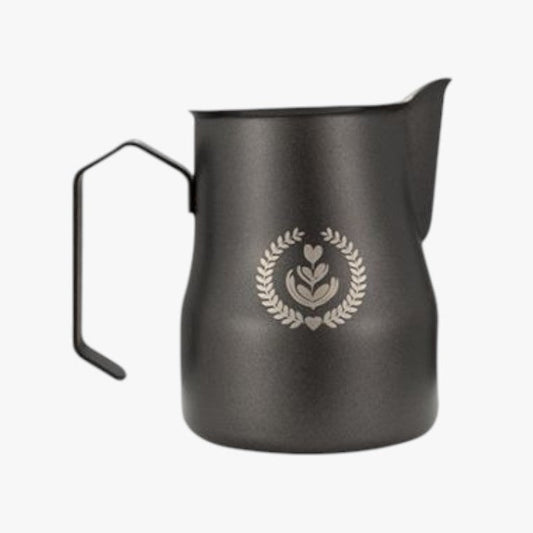
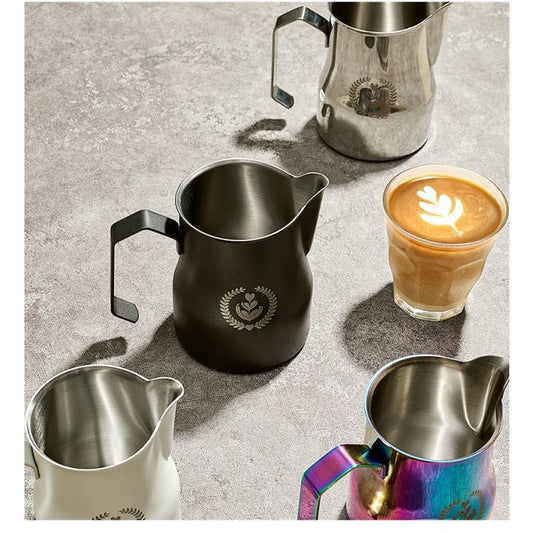
- A clean milk pitcher
- Cold milk
- A thermometer, if needed
Step 1: start cold
Use cold milk, fresh from the refrigerator. Cold milk gives you more time to build up the foam. Fill the pitcher one-third to halfway, so the milk has room to spin. Purge the steam wand briefly before you start, so no condensation gets into your milk.
Step 2: stretch
Position the steam wand just below the surface of the milk. You’ll hear a soft “tss.” This adds air to the milk. It takes about 2 to 4 seconds, until the milk has increased in volume by about 20 to 30%. For latte art, stretch the milk less than you would for a cappuccino. Hearing a loud squeal or gurgle? The wand is too close to the surface.
Step 3: roll
Position the wand a little deeper in the milk. The milk will start spinning. Don’t add any more air: the bubbles will become small and the foam will turn smooth. You should hear a soft hum.
Step 4: stop at 55 to 65 °C
Stop when the milk reaches about 55 to 65 °C. Use a thermometer or feel the pitcher: it should be too hot to hold for long. Above about 70 °C, milk loses quality and tastes cooked. Turn off the steam before removing the wand from the milk, and wipe the wand clean immediately.
Step 5: tap and swirl
Tap the pitcher on the counter once to pop large bubbles. Then swirl the milk until it shines like wet paint. Is the foam separating from the milk? Swirl for another 5 to 10 seconds.
Common mistakes
- Too much air: the foam is dry and thick instead of glossy.
- Too hot: the milk tastes cooked and the foam collapses faster.
- Not enough swirling: large bubbles remain in the milk.
Plant-based milk
Plant-based milk behaves differently from cow’s milk. Find out why it sometimes curdles in plant-based milk in your coffee.
What can you use it for?
- Make a latte art heart with your steamed milk.
- Choose the milk pitcher that’s right for you.
- Read about the difference between cappuccino, flat white, and latte.
- Browse our milk pitchers.